
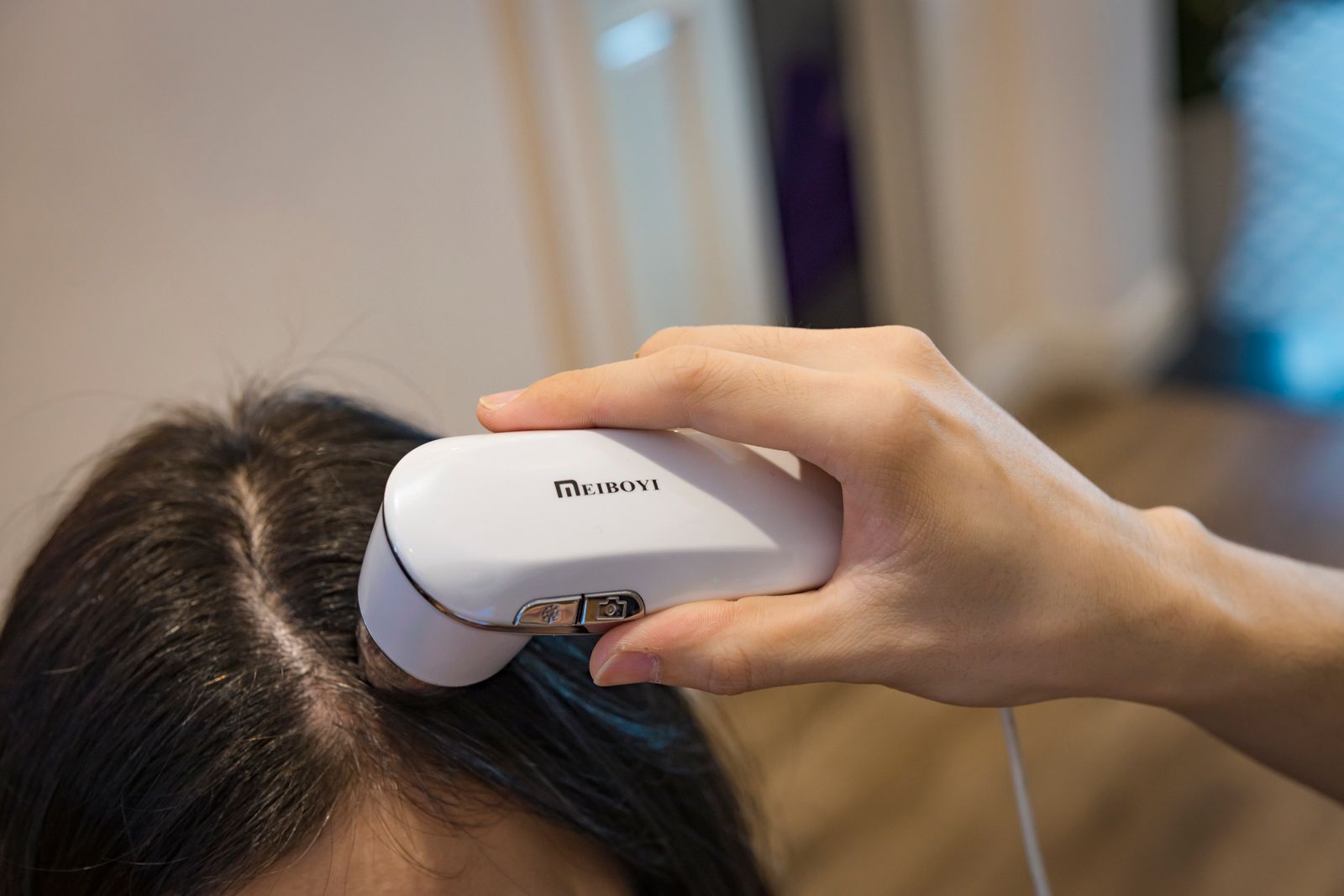
Hair Transplant Antalya
Hair Transplant Antalya is an increasingly popular option for patients from the United Kingdom, Germany, Russia, Europe and other international markets who are considering hair restoration in Turkey. At Haarex Clinic, we approach hair transplantation as a personalised medical and aesthetic process rather than simply transferring a fixed number of grafts from one area of the scalp to another.
Every treatment journey begins with a detailed consultation. Before a procedure is planned, we evaluate the patient’s type of hair loss, donor area capacity, scalp condition, hair thickness, facial proportions and long-term expectations. These factors help determine not only which technique may be appropriate, but also how the available donor grafts should be used responsibly.
A natural-looking hair transplant depends on much more than the total number of grafts. Hairline position, implantation angle, growth direction, graft distribution and preservation of the donor area all contribute to the final appearance.
At Haarex Clinic in Antalya, our goal is to build a treatment plan around the individual patient. For some people, the main priority may be frontal hairline restoration. Others may require coverage across the mid-scalp or crown. Some patients may also need to preserve enough donor capacity for possible future procedures.
Turkey has become a widely researched destination for hair transplantation, while Antalya offers additional advantages for international patients because of its international airport, accommodation options and established tourism infrastructure.
However, choosing a clinic should not be based only on location, package price or advertised graft numbers. Medical assessment, donor management, realistic expectations, clinical planning and postoperative follow-up are equally important parts of the decision.

Why Choose Antalya for Hair Transplant?
Antalya is internationally known as one of Turkey’s major tourism and travel destinations. It receives visitors from many countries throughout the year and offers a wide range of flight and accommodation options.
For patients researching hair transplant Turkey procedures, this accessibility can make travel planning easier.
A patient travelling from London, Manchester, Berlin, Düsseldorf, Moscow or another international city may be able to combine medical treatment with a structured stay in Antalya.
The city itself, however, should not be the only reason to choose a hair transplant clinic.
Patients should also evaluate whether the clinic offers:
- Detailed donor area assessment
- Individual hairline planning
- Long-term hair loss evaluation
- Appropriate technique selection
- Medical supervision
- Real patient results
- Clear postoperative instructions
- Follow-up support after returning home
At Haarex Clinic, the treatment plan is not based on a single standard package.
One patient may need restoration only in the frontal region, while another may have extensive thinning from the hairline to the crown. The number of grafts, distribution strategy and technique therefore need to be planned individually.
Direct Flights to Antalya
Antalya has a large international airport with direct and connecting flights from many European and international destinations.
For patients travelling from the United Kingdom, Germany, Russia and other countries, this can simplify the logistics of a hair transplant journey.
Flight planning should nevertheless be coordinated with the treatment schedule.
The operation day, early postoperative control, first wash and return flight should be organised carefully.
Travelling home too quickly after treatment may make the early recovery period less comfortable.
For this reason, international patients are usually advised to plan their stay according to the clinical schedule rather than booking the shortest possible trip.
Holiday and Treatment Together
One of the reasons patients consider Antalya is the opportunity to stay in a well-known holiday destination.
However, the first days after a hair transplant should not be treated like a normal beach holiday.
Immediately after the procedure, patients usually need to protect the scalp from excessive sun exposure, avoid swimming and limit strenuous physical activity.
Sea, swimming pools, saunas and intensive exercise may need to be avoided during the early healing phase.
Antalya can still provide a comfortable environment for the treatment journey, but medical recommendations should always take priority over holiday activities.
Why International Patients Prefer Antalya
International patients may have different expectations from hair transplantation.
A patient from the United Kingdom may be particularly concerned about achieving a subtle and age-appropriate frontal hairline. A patient from Germany may place greater emphasis on long-term donor preservation. A Russian patient may be focused on restoring a large area while maintaining natural density.
These examples show why communication and expectation management are important.
Before travelling to Antalya, patients can usually begin with a preliminary assessment by sending clear photographs of their hair and donor area.
Useful images generally include:
- Front hairline
- Right temple
- Left temple
- Top of the scalp
- Crown
- Back donor area
- Right side of the donor region
- Left side of the donor region
These images can help the clinical team form an initial view of the hair loss pattern.
However, a definitive treatment plan should be created after an in-person examination.
International patients should also consider the complete treatment pathway:
- Initial consultation
- Travel planning
- Clinical assessment
- Hairline design
- Procedure
- Early postoperative care
- First wash
- Return travel
- Long-term follow-up
At Haarex Clinic, we view these stages as part of one continuous process rather than separate services.
Personalized Treatment Plan
There is no universal graft number that is suitable for every patient.
Two people may appear to have a similar degree of hair loss but have very different donor capacity.
The visual effect of a hair transplant can also be influenced by:
- Hair thickness
- Hair colour
- Scalp-to-hair contrast
- Straight, wavy or curly hair structure
- Number of hairs per follicular unit
- Size of the recipient area
- Remaining native hair density
For this reason, a treatment plan should not be copied from another patient’s result.
The aim is not always to harvest the highest possible number of grafts.
A more responsible approach is to use the available donor follicles where they can create the greatest visual improvement while protecting long-term donor resources.
Doctor-Led Hair Transplant Procedures
Hair transplantation requires medical assessment, planning and careful execution.
Before treatment begins, it is important to understand not only where the patient has lost hair, but also the underlying hair loss pattern and how it may progress over time.
At Haarex Clinic, the consultation process may include evaluation of:
- Hair loss pattern
- Donor density
- Hair calibre
- Scalp condition
- Previous hair transplant history
- Medications
- General expectations
- Potential future hair loss
A technique should be selected after these factors have been considered.
The method itself is only one part of a successful treatment plan.
Natural Hairline Design
The frontal hairline is one of the most visible aspects of a hair transplant.
A hairline that is too low, too straight or too symmetrical may appear unnatural.
It can also use more grafts than necessary.
Hairline design should take into account:
- Patient age
- Facial proportions
- Forehead dimensions
- Existing hairline
- Future hair loss
- Donor capacity
Natural hairlines are rarely perfectly straight.
Subtle irregularities and carefully positioned single-hair grafts may help create a softer transition.
At Haarex Clinic, the objective is not to create the lowest possible hairline.
The goal is to establish a position that suits the patient’s face and can remain balanced as they age.
Donor Area Protection
The donor area is one of the most valuable resources in hair transplantation.
The number of follicles that can be safely harvested is limited.
Overharvesting a small area can create visible thinning or an uneven donor appearance.
This becomes particularly important in younger patients.
If natural hair loss continues in the future, the patient may need another procedure.
If too much donor capacity has been used during the first operation, future options may become limited.
For this reason, Haarex Clinic places donor preservation at the centre of long-term planning.
The objective is not simply to obtain enough grafts for the current procedure, but to protect the donor area as much as possible for the future.
Sapphire FUE Hair Transplant
Sapphire FUE is one of the techniques commonly researched by patients considering hair transplant Antalya treatment.
In FUE, individual follicular units are extracted from the donor area.
During Sapphire FUE, specialised sapphire blades are used to create recipient channels before the grafts are implanted.
These blades can allow fine and controlled channel creation.
Angle, depth and direction should be carefully planned according to the area being treated.
For example, hair in the frontal region usually grows at a different angle from hair in the crown.
The crown also has a natural spiral or whorl pattern that should be respected during implantation planning.
The use of sapphire blades alone does not guarantee a natural result.
The final outcome is also influenced by:
- Patient suitability
- Donor management
- Hairline design
- Graft handling
- Channel direction
- Graft distribution
- Postoperative care
Patients who want to understand the technique in greater detail can visit our Sapphire FUE Hair Transplant page.
Sapphire FUE may be considered for frontal hairline reconstruction, mid-scalp coverage and selected crown cases depending on the patient’s needs.
DHI Hair Transplant
DHI is another hair transplantation method that may be considered in selected patients.
With DHI, prepared grafts can be placed using specialised implantation pens.
This technique may be useful in certain cases, particularly when implantation is planned between existing hairs or when a specific implantation strategy is preferred.
However, DHI should not automatically be considered better than Sapphire FUE.
Likewise, Sapphire FUE is not automatically better for every patient.
Technique selection depends on:
- Recipient area
- Existing hair
- Required graft number
- Donor capacity
- Desired density
- Overall treatment strategy
More information is available on our DHI Hair Transplant page.
At Haarex Clinic, we do not believe that one technique should be applied to every patient.
The treatment method should be selected according to the patient’s individual hair structure, donor area and restoration goals.
Hair Transplant Cost in Antalya
Hair transplant cost in Antalya is one of the most common questions asked by international patients.
However, it is difficult to determine an accurate price without first understanding the patient’s hair loss and treatment needs.
The overall cost may vary depending on factors such as:
- Extent of hair loss
- Size of the recipient area
- Estimated graft requirement
- Technique
- Procedure complexity
- Additional treatments
- Clinical services
- Postoperative follow-up
A patient requiring only frontal hairline restoration may need a very different treatment plan from someone requiring frontal, mid-scalp and crown coverage.
For this reason, comparing clinics only on the basis of a package price can be misleading.
Patients can review our Hair Transplant Cost Antalya page for more information about pricing and treatment planning.
When researching hair transplant Turkey cost options, it is useful to consider what is included in the medical process rather than looking only at the lowest advertised price.
Useful questions include:
Why is this particular technique recommended for me?
How much donor capacity do I have?
How will my hairline be designed?
How many grafts can safely be harvested?
What postoperative support is included?
How will future hair loss be considered?
Price matters, but it should be evaluated alongside the quality and logic of the treatment plan.
Recovery Process After Hair Transplant
Hair transplant recovery takes place gradually.
The scalp may appear red and sensitive during the first few days.
Small crusts usually develop around the transplanted follicles.
Some patients may also experience temporary swelling.
During this early period, transplanted grafts should be protected from rubbing, impact and unnecessary touching.
Patients should follow clinical instructions regarding sleeping position, washing and physical activity.
For detailed postoperative instructions, patients can refer to our Patient Guide.
Days 1–3
The recipient area may appear red and sensitive.
Some temporary swelling can occur around the forehead.
Patients should avoid touching or scratching the grafts.
Sleeping with the head slightly elevated may be recommended according to individual instructions.
Days 4–7
Crusting becomes more visible.
Washing is performed according to the clinic’s protocol.
The scalp should not be rubbed aggressively.
Days 7–14
Crusts usually begin to loosen and reduce gradually.
Redness may also decrease during this period.
The exact speed of healing varies between patients.
First Month
Some transplanted hairs may shed.
This stage is often referred to as shock loss or shedding.
The shedding of the visible hair shaft does not necessarily mean that the follicle itself has been lost.
Months 3–4
Early new hair growth may begin.
At first, the new hairs can appear thin and uneven.
This is part of the normal development process.
Around Month 6
Growth generally becomes more noticeable.
Density may improve significantly compared with the earlier months.
However, the final result is still developing.
Months 9–12
For many patients, the result becomes considerably more mature during this period.
Hair calibre and visual density may continue to improve.
Crown growth can sometimes require a longer maturation period.
Long-Term Results
A hair transplant should be planned with future hair loss in mind.
Transplanted follicles may remain while native non-transplanted hair continues to thin.
If this possibility is ignored during the initial treatment plan, future areas of thinning may create an uneven appearance.
At Haarex Clinic, long-term planning is therefore an important part of the consultation.
The objective is not simply to improve today’s appearance but to create a result that can remain balanced as the patient’s natural hair pattern evolves.
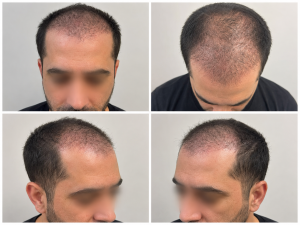
Before and After Results
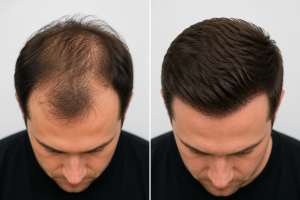
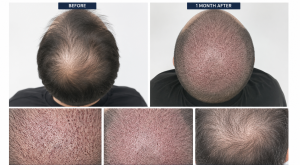
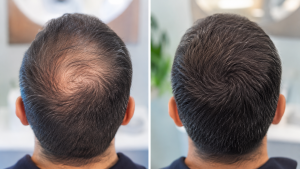
Before-and-after photographs can provide valuable information when choosing a hair transplant clinic.
However, these images should be reviewed carefully.
Good comparisons are easier when photographs have:
- Similar lighting
- Similar angles
- Similar hair length
- Clear visibility of the donor and recipient areas
Photographs taken immediately after surgery mainly show the planned hairline and graft placement.
They do not show the final result.
Patients considering Haarex Clinic can review our Before and After Results to see examples of different hair loss patterns and treatment areas.
When reviewing patient results, it is useful to consider more than density alone.
Important factors include:
- Hairline naturalness
- Direction of growth
- Hairline softness
- Distribution of density
- Crown pattern
- Donor area appearance
- Integration with existing hair
Every patient has different donor capacity, hair structure and healing characteristics.
Therefore, another patient’s result should not be interpreted as a guarantee of the same outcome.
Doctor’s View: What Matters Most in Hair Transplant Planning?
One of the most important principles in hair transplantation is using the donor area responsibly.
The goal should not always be to extract the highest possible number of grafts.
Every harvested follicular unit represents part of a limited donor supply.
This becomes particularly important for younger patients whose hair loss may continue.
If a large number of grafts are used to create a very low frontal hairline during the first procedure, the patient may have fewer options if the mid-scalp or crown becomes thinner in the future.
Growth direction is equally important.
Even if transplanted follicles grow well, incorrect angles can create an unnatural result.
Hairline design, donor protection, graft distribution and future hair loss therefore need to be considered together.
A hair transplant should be planned as a long-term restoration strategy rather than as a one-day cosmetic procedure.
Patient Experience at Haarex Clinic
The patient journey at Haarex Clinic can begin before travelling to Antalya.
International patients may send clear photographs for an initial hair assessment.
This preliminary evaluation can help the team understand the general hair loss pattern and donor appearance.
It does not replace a physical examination.
After arriving at the clinic, the scalp and donor area are assessed again.
The patient can then discuss:
- Hairline position
- Areas requiring treatment
- Approximate graft distribution
- Technique
- Recovery expectations
The final treatment plan is established after this assessment.
On the day of the procedure, the hairline is reviewed and the treatment zones are confirmed.
After the transplant is completed, patients receive postoperative instructions.
These may include information about:
- Sleeping position
- Scalp protection
- First washing
- Crust formation
- Physical activity
- Return travel
- Ongoing follow-up
Support does not end when the patient leaves Antalya.
Questions about redness, shedding, new growth and hair maturation can arise over the following weeks and months.
Long-term communication is therefore an important part of the patient experience.
Antalya and the Advantages of Medical Tourism
Antalya combines international accessibility with extensive hotel and tourism infrastructure.
For patients travelling from the United Kingdom, Germany, Russia and other countries, this can make the organisation of treatment, accommodation and transport more convenient.
However, medical tourism should not be treated like a conventional holiday package.
The primary purpose of the trip is medical treatment.
Before booking travel, patients should understand:
- How many days they may need to remain in Antalya
- When the procedure will take place
- When the first control is planned
- When the first wash is performed
- When return travel is appropriate
- Which activities should temporarily be avoided
Planning these details before travelling can make the treatment journey more comfortable and reduce unnecessary stress after the procedure.
Frequently Asked Questions
How Much Does a Hair Transplant Cost in Antalya?
Hair transplant prices in Antalya vary according to the individual treatment plan.
Factors such as hair loss level, graft requirement, technique and overall procedure complexity can influence the cost.
For more information, patients can visit our Hair Transplant Cost Antalya page.
The most useful quotation is usually provided after the donor area and recipient area have been assessed.
How Many Grafts Do I Need?
The required number of grafts varies significantly between patients.
A minor hairline recession may require a very different number of grafts from extensive frontal and crown hair loss.
Donor capacity must also be considered.
The aim should not simply be to use the highest possible number of grafts.
A balanced distribution and long-term donor protection are more important.
Is the Procedure Painful?
Hair transplantation is generally performed under local anaesthesia.
Patients may experience brief discomfort during the administration of anaesthetic.
Sensitivity during and after the procedure differs between individuals.
Postoperative discomfort is generally managed according to the clinic’s medical recommendations.
How Long Should I Stay in Antalya?
The recommended stay depends on the treatment schedule and postoperative plan.
International patients often arrange a stay that allows enough time for the procedure, an early control and initial aftercare.
The exact number of days should be discussed with the clinic before flights and accommodation are finalised.
When Do the Final Results Appear?
Early new growth may begin around the third or fourth month.
By approximately six months, the transplanted area often appears more developed.
Significant maturation is commonly seen between months nine and twelve.
The crown may continue to develop for longer.
Can I Swim in the Sea After a Hair Transplant?
Swimming immediately after the operation is generally not recommended.
The scalp needs time to heal and the grafts need to stabilise.
The appropriate time to return to swimming should be determined according to the patient’s recovery and the clinic’s recommendations.
Which Is Better: Sapphire FUE or DHI?
There is no single technique that is best for every patient.
Sapphire FUE may be appropriate for certain treatment plans, while DHI may be considered in others.
The decision should be based on the patient’s donor area, recipient area, existing hair and overall goals.
Start Your Hair Transplant Antalya Journey with Haarex Clinic
Hair Transplant Antalya should begin with an accurate assessment rather than a standard graft package.
At Haarex Clinic, we evaluate the patient’s hair loss pattern, donor area capacity, scalp condition, hair characteristics, facial proportions and long-term expectations before creating a treatment plan.
Our objective is not only to cover visible areas of hair loss.
We focus on creating a natural hairline, preserving the donor area, planning appropriate growth directions and considering future hair loss.
The most suitable technique and graft distribution are determined according to the individual patient.
Free Hair Analysis
Patients from the United Kingdom, Germany, Russia, Turkey and other countries can request an initial hair analysis before travelling to Antalya.
For a preliminary assessment, clear photographs should ideally show:
- Front hairline
- Right temple
- Left temple
- Top of the scalp
- Crown
- Back of the donor area
- Right donor side
- Left donor side
These photographs can help provide an initial understanding of the hair loss and donor appearance.
A final medical treatment plan is prepared after an in-person clinical evaluation.
Contact Haarex Clinic on WhatsApp
Patients who would like information about Hair Transplant Antalya, Sapphire FUE, DHI, estimated graft requirements, recovery or travel planning can contact Haarex Clinic through WhatsApp.
Rather than choosing treatment only on the basis of another patient’s graft number or result, it is more useful to understand your own donor capacity and restoration options.
Request a Free Hair Analysis and take the first step towards a personalised hair restoration plan with Haarex Clinic in Antalya.
Bu içerik genel bilgilendirme içindir. Kişisel değerlendirme ve bakım önerileri için hekiminize başvurun.